
CAM programming for machining plastics
AXIONICS was born in a company that machines engineering plastics. Here is why these materials need special attention at the programming stage and how AXIONICS takes accumulated experience into account.
Guide2 min readAXIONICS editorial team
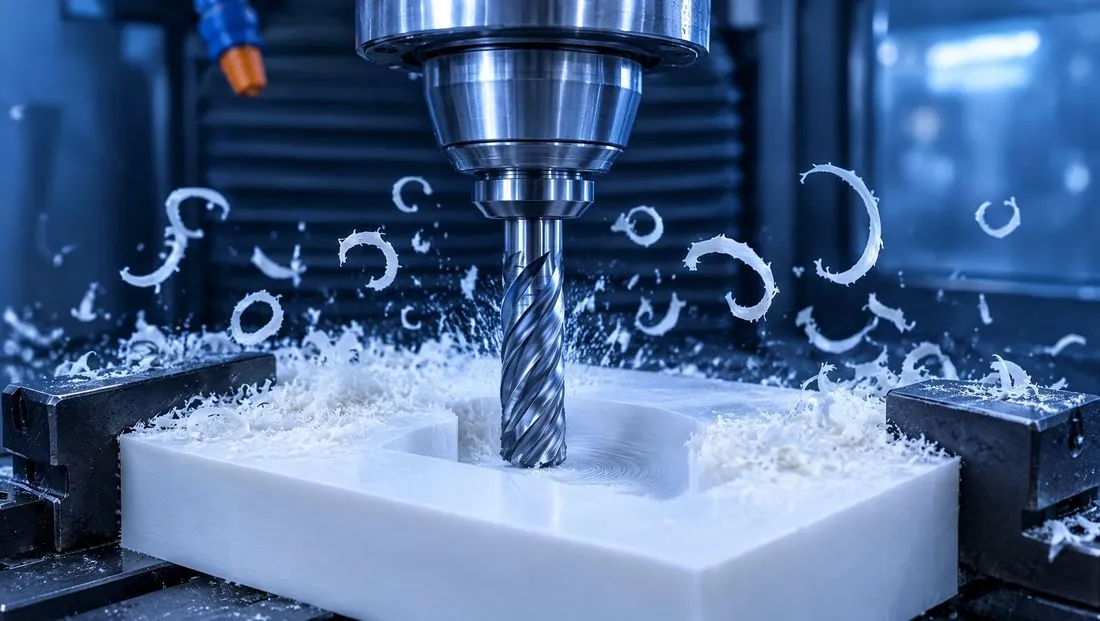
Plastics are not soft metals
POM, PTFE, polyethylene, polyamide and other engineering polymers machine well on CNC, but they do not behave like aluminium or steel. They conduct little heat, expand more, some deform if heated or clamped too hard, others tend to form burrs. That is why strategies, tools and parameters that work on metals are often wrong.
Where part quality is decided
- Tool choice: usually sharp cutters with few flutes and good chip evacuation.
- Workholding: vise, vacuum table or clamping, without deforming the part.
- The order of operations and the stock left for finishing.
- Holes and threads: a pilot hole of the right diameter and a strategy suited to the material.
- Chamfers and deburring, which make the difference in the final look of plastic parts.
Why the company's memory matters more
With plastics, generic literature helps little: what counts is experience with that material, that machine, that type of part. AXIONICS starts exactly here. The materials catalogue collects the properties extracted from supplier datasheets, each with its source. The tool catalogue and past jobs say what was used and with what results.
When AXIONICS proposes operations for a part in POM or PTFE, it looks at similar jobs already done in that material and at the company's cutting data. If a value is missing, it flags it to the technician instead of inventing it.
Three real examples
On the Machining page you can see three real parts in POM, PTFE and PEEK, with the operations prepared by AXIONICS and the toolpath simulated line by line.